

News Center
Lijuzhankang: Bringing advanced biopharmaceuticals to China
Release time:
2014-12-24
Rituximab: Bringing advanced biopharmaceuticals to China
Since its establishment five years ago, from gradually introducing a team of overseas returnees, to continuously receiving capital increases from the parent company, and then collaborating with a well-known American biopharmaceutical company, Lizhu Monoclonal Antibody has been speeding along the fast track of development. As the time for the birth of the first product approaches, renowned overseas returnee biopharmaceutical experts Peng Yucai, Fu Daotian, and their team leading the "Protein Drug Research and Industrialization" are also beginning to challenge greater miracles.
Lizhu Monoclonal Antibody: Bringing Advanced Biopharmaceuticals to China
Zhuhai, a subtropical coastal city located at the estuary of the Pearl River in Guangdong, is one of the few livable cities in China. Renowned overseas returnee biopharmaceutical experts Peng Yucai, Fu Daotian, and their team leading the "Protein Drug Research and Industrialization" chose to fulfill their dream of returning to their homeland here.
What attracted them was Lizhu Group's subsidiary, Lizhu Monoclonal Antibody Biotechnology Co., Ltd. (hereinafter referred to as Lizhu Monoclonal Antibody). Since its establishment five years ago, from gradually introducing a team of overseas returnees, to continuously receiving capital increases from the parent company, and then collaborating with a well-known American biopharmaceutical company, Lizhu Monoclonal Antibody has been speeding along the fast track of development. As the time for the birth of the first product approaches, this group of passionate scientists, determined to rewrite the history of biopharmaceuticals in China, is also beginning to challenge greater miracles.
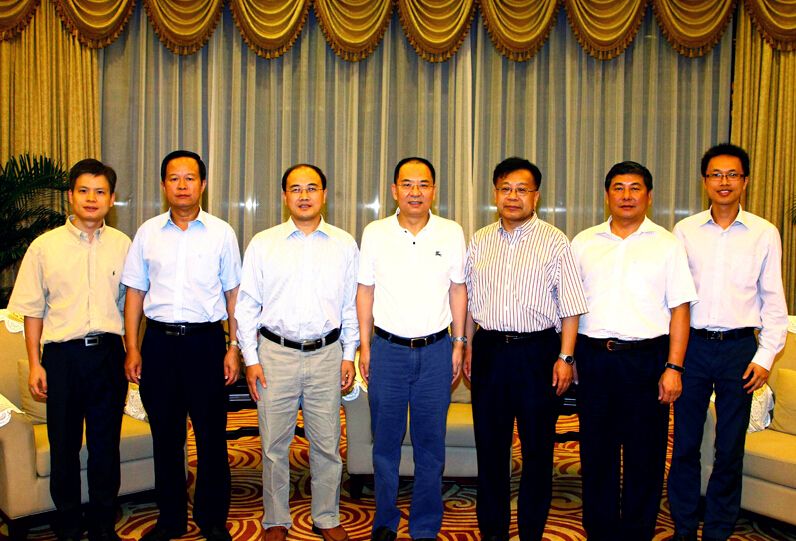
The sentiment of overseas returnees returning to their homeland
In September 2010, the news that Dr. Peng Yucai, a senior scientist at Baijian Biopharmaceuticals in the United States, was joining Lizhu Monoclonal Antibody spread throughout the industry. Many were puzzled as to why this star figure in the biopharmaceutical field suddenly resigned from a top American pharmaceutical company to join a new company that was still in its infancy in China.
Peng Yucai's return to China and his connection with Lizhu stemmed from a long-distance call he received from Beijing in May of that year, inviting him to join. After the first call, Peng Yucai had a restless night. However, during the second call the next day, he, who was usually very meticulous, "unexpectedly" agreed to the invitation to come back and take a look.
In July 2010, Peng Yucai was invited to visit the headquarters of Lizhu Group in Zhuhai. However, what he saw was that the equipment was quite outdated, with a significant gap compared to large international biopharmaceutical companies. "I felt a bit disheartened at that time, very uneasy," Peng Yucai said. What changed his mind was the meeting with Chairman Zhu Baoguo in Shenzhen. They talked from noon until 11 PM, and Zhu Baoguo's confidence and sincerity in developing biopharmaceuticals made him change his mind, and he pledged to do his best to develop Lizhu's biopharmaceuticals.
After returning to the United States, Peng Yucai submitted his resignation to Baijian Biopharmaceuticals, bidding farewell to the superior material life and comfortable working environment in the U.S. In September 2010, he arrived at Lizhu with four large boxes filled with the latest biopharmaceutical materials, embarking on the journey of monoclonal antibody exploration. He was also the first overseas returnee attracted by Lizhu Monoclonal Antibody. A senior executive of Lizhu Group commented that Dr. Peng's joining laid a solid foundation for the subsequent rapid development of Lizhu Monoclonal Antibody.
"Looking back, we did a great job in the early stages." Peng Yucai said that the technology, processes, and quality of Lizhu Monoclonal Antibody strictly operate according to international biopharmaceutical standards, complying with regulations and respecting science. It is precisely this platform that aligns with international standards that has attracted one after another senior experts in the biopharmaceutical field to return to China.
In May 2012, Fu Daotian joined Lizhu Group as the Executive Vice President of Lizhu Monoclonal Antibody. Prior to this, he had served as the Scientific Director, Senior Scientific Director, and Vice President of Research at Genzyme, one of the five largest biopharmaceutical companies in the world, for thirteen years. After nearly thirty years of research in the U.S., Fu Daotian had already achieved great success and numerous accomplishments. He directly led and participated in the world's most advanced virus analysis platform and established globally top-level antibody drug production processes and analysis platforms; he directly led and participated in the research and development, international application, and industrialization of five major biopharmaceuticals, four of which have been launched in over 70 countries, including the U.S., with global sales exceeding $2 billion.
However, as a first-generation immigrant, Fu Daotian always kept his homeland in mind, and deep down, he had a strong sense of traditional intellectual patriotism. Fu Daotian told the author that after graduating from a domestic university in 1984, he went to the U.S. to continue his studies and had lived and worked in the U.S. for 28 years, developing a strong desire to return home. After careful consideration, he resigned from his job in the U.S. in 2012 and joined Lizhu Monoclonal Antibody with his team.
During his two years at Lizhu Monoclonal Antibody, Fu Daotian not only led his team members in advancing research but also played the role of a "missionary," attracting more and more senior overseas returnees with years of experience in biopharmaceuticals to join and promote project development together. Dr. Kan Ziyi, the current Deputy General Manager of Lizhu Monoclonal Antibody and a talent from the national "Thousand Talents Plan," is one of them. Speaking about his original intention to return to China, this former Chief Senior Scientist of Global Biologics at Pfizer, who lived in Canada for over twenty years, empathized with Fu Daotian. Kan Ziyi said that although he had settled in Canada with his family for many years, he hoped to return to his homeland to do something—developing one or two drugs that could be used by the public.
Before joining Lizhu Monoclonal Antibody, there was a small episode: Zhuhai was not on Kan Ziyi's list of places to develop after returning to China. The truth is that this man from Northeast China, who left the country right after his undergraduate studies, had never heard of Zhuhai before. Like many overseas returnees, Kan Ziyi's first stop after returning to China was Beijing. However, when he arrived in Zhuhai and saw Fu Daotian's team's research projects, he was moved. In early 2014, Kan Ziyi officially joined Lizhu Monoclonal Antibody as the Quality Vice President in the field of monoclonal antibody pharmaceuticals.
Fu Daotian introduced that Lizhu Monoclonal Antibody has now grown from an initial team of over 30 people to more than 140, attracting 9 overseas returnee PhDs in the biopharmaceutical field, many of whom have over 15 years of experience in research and industrialization at large global biopharmaceutical companies. Currently, the team has developed monoclonal antibody drugs for treating autoimmune diseases and has applied for clinical trials, while another monoclonal antibody generic drug for treating blood diseases has also entered the pilot stage. However, due to the lack of talent in the domestic biopharmaceutical field, most of the remaining members are trained from recent graduates in pharmaceutical-related majors.
Among the current 9 core members, each person plays their role according to their strengths. Fu Daotian jokingly said that he is good at managing affairs, while others do not manage; Kan Ziyi has long been engaged in quality control during the drug development process, ensuring the quality of Lizhu Monoclonal Antibody's products under research; Dr. Zhang Qiang, who recently returned from the U.S., has many years of experience in biopharmaceutical business development, and his specialty is finding valuable investment projects for the company and strategically supporting development.

The charm of Lizhu Monoclonal Antibody
In the pharmaceutical field, attracting an overseas returnee team to focus on research and development in Zhuhai, a third-tier city, is not easy. Especially in the high-tech biopharmaceutical field, cultivating such a team is even more challenging for enterprises.
Kan Ziyi said that he considered returning to China more than ten years ago, but at that time there were no companies that could accept him. There are very few promising companies in the biopharmaceutical field in China, and the emergence of Lizhu monoclonal antibody caught his attention.
Monoclonal antibodies belong to high-end biopharmaceuticals and are the focus of many innovative pharmaceutical companies in China. Data shows that in 2012, six of the top ten drugs in global sales were occupied by cloned antibody drugs, and they took the top three spots in sales. Data from Chinese hospital terminals shows that China is in the initial stage of monoclonal antibody drug development, increasing at a rate of over 50% each year.
Lizhu monoclonal antibody is a product jointly invested by Lizhu Group and its parent company, Health Yuan, in 2010. After several rounds of capital increases, the registered capital is now 500 million yuan, representing the highest level of R&D and capital investment in monoclonal antibody drugs in China. For experienced biopharmaceutical experts like Fu Daotian, the reason for choosing Lizhu monoclonal antibody is simple: it has potential.
Fu Daotian admitted that choosing Lizhu monoclonal antibody was a matter of "timing, location, and harmony of people." From his own perspective, he has limited advantages in the technical platform and is better at team operations. At that time, his wish to return to China was to work as a professional manager in a company of a certain scale, and Lizhu monoclonal antibody happened to be looking for a candidate for the executive vice president. From the perspective of corporate scale, Lizhu monoclonal antibody is backed by two listed companies, Lizhu Group and Health Yuan, which have a strong financial foundation and technical platform, but are not constrained by the parent company's system, allowing technical management personnel enough decision-making autonomy.
Years of overseas living experience have made Fu Daotian's thinking clearly carry Western characteristics. His criterion is whether the company recognizes that the team is the most valuable asset. "By 2012, Lizhu monoclonal antibody had been established for two years, and Dr. Peng had already built a research platform and team that aligned with the highest international standards, which had already reached a certain scale in the domestic biopharmaceutical field. At the same time, the parent company also gives you enough freedom and sense of recognition. I feel that I can do what I am good at here, so I came."
With the formal joining of Peng Yucai and Fu Daotian, the research and innovation team of Lizhu monoclonal antibody is catching up to international standards. In 2012, Fu Daotian led the "Protein Drug Research and Industrialization" team, and Peng Yucai was selected for the "Third Batch of Leading Talent Introduction Program in Guangdong Province." The Lizhu monoclonal antibody R&D team led by the two made Zhuhai the only city among provincial-level cities to be selected for both innovative research teams and leading talents. "We welcome more talents to join Lizhu monoclonal antibody."
For Fu Daotian and his team, their task is to industrialize the R&D projects. So, who will be responsible for sales after the product is launched? A mid-level manager from Lizhu Group revealed to the author that Lizhu monoclonal antibody is a research and development company, and the sales of products after launch are handled by the sales team of Lizhu Group. Fu Daotian said that what they need to do is all before the product is launched. It is this clear division of labor that allows his team to fully invest their energy into research without concerns about post-industrialization.
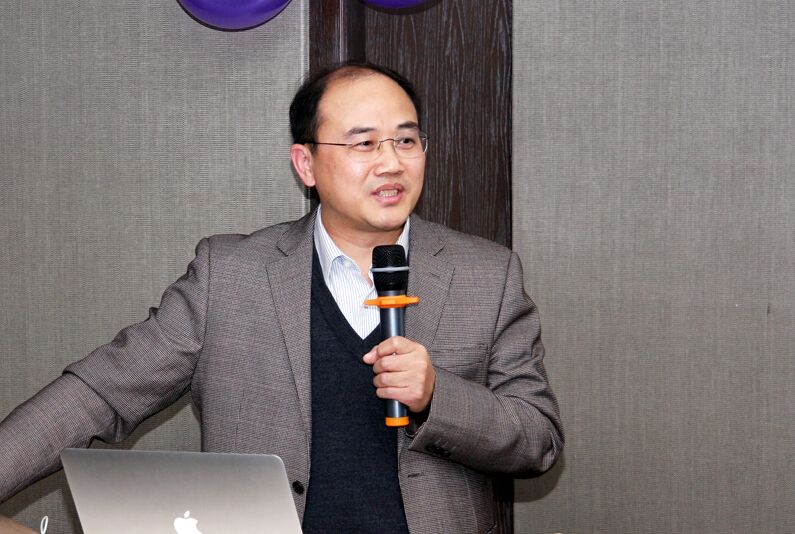
The hundred billion blue ocean of monoclonal antibodies
Regarding the prospects of Lizhu monoclonal antibody, there is great anticipation from the decision-making level of Lizhu Group and Health Yuan to investment institutions. At the beginning of the establishment of the monoclonal antibody company, someone quoted a statement from the leaders of Lizhu Group, "A hundred billion enterprises look at chemical drugs, while a thousand billion enterprises look at monoclonal antibodies." Lizhu Group's R&D investment is mainly directed towards monoclonal antibody products under research.
Undoubtedly, the rapid operation of Lizhu monoclonal antibody in the past five years has given the monoclonal antibody team greater confidence. Their team has already positioned itself as a leader at the forefront of China's biopharmaceutical wave. Fu Daotian introduced that currently, Lizhu monoclonal antibody has nearly 10 products under research, among which the recombinant humanized anti-tumor necrosis factor monoclonal antibody for injection has entered clinical phase II, approximately 3-4 years away from market launch; two other products are applying to enter clinical phase I. "When we chose the first project, we were relatively conservative and decided to develop drugs that are already available on the market. In the future, we hope to add at least one new product under research each year."
It is understood that anti-tumor necrosis factor monoclonal antibodies are mainly used for autoimmune diseases such as rheumatoid arthritis, psoriasis, and ankylosing spondylitis. "Currently, there are already three anti-tumor necrosis factor monoclonal antibody drugs on the market, with global sales of about 20 billion US dollars last year. However, due to the high drug prices, the annual cost is 100,000 US dollars, and only some patients in developed coastal cities in China have the opportunity to use them." Kan Ziyi is not worried about local companies seizing the opportunity; he believes that current clinical data shows that the quality of the drugs under research is comparable to that of imported drugs. Once successfully launched, it will elevate the quality of domestic drugs of this type to align with international standards and significantly reduce treatment costs, with an initial estimate of reaching a market scale of 1 billion yuan in three years.
According to data from the China Industry Insight Network Research Center, with the increase in the number of patients in China, the popularization of medical insurance, and the enhancement of patients' purchasing power, the market size of rheumatoid arthritis drugs in China will reach 17 billion yuan in 2016.
For these overseas returnee PhDs, the greater attraction of Lizhu monoclonal antibody lies in its connection to industrialization. In April of this year, Lizhu monoclonal antibody invested 15 million US dollars, partnering with Adage Capital, one of the top ten hedge funds in the United States, and Jinglin Asset to invest in the biogeneric drug R&D company Epirus. Less than half a year later, Epirus announced a strategic agreement with Lizhu monoclonal antibody to jointly develop five major biogeneric drugs, with the first cooperative product being infliximab. At the same time, Epirus will also transfer part of the product manufacturing platform to Lizhu and provide technical support.
In the eyes of the scientists in the Lizhu monoclonal antibody team, collaborating with well-known overseas R&D companies through technical exchanges and project cooperation can avoid the risks of lengthy early-stage R&D. In fact, the investment costs and risks for antibody drugs are much higher than for other types of drugs, and the cooperation model of Lizhu monoclonal antibody is essentially taking a shortcut.
Undoubtedly, the addition of the overseas monoclonal antibody team has injected a shot of adrenaline into Lizhu monoclonal antibody. However, biogeneric drugs are an extremely complex system engineering, with significant challenges at every node. If ultimately unsuccessful, the previous financial investments will be wasted, which deters most domestic biopharmaceutical companies. Peng Yucai admitted that running a biopharmaceutical company cannot rely solely on one drug but must build a platform that continuously produces new products. Developing drugs is inherently a high-reward, high-risk industry, especially for biopharmaceuticals. For all of China, the R&D of biopharmaceuticals has just begun, and there are still very few emerging pearls like Lizhu monoclonal antibody. "We entered the biopharmaceutical field late; international biopharmaceutical companies have basically paved the way over the past 20 years, and we can follow their lead, which will reduce risks," Kan Ziyi believes.
With the concept of monoclonal antibodies, Lizhu Group, which is moving towards high-end formulations, has been sought after by investment institutions. Although there are uncertainties in the products under research, their good profit prospects will effectively enhance investor expectations and increase the company's investment value. CICC's research report believes that the addition of fresh blood has greatly enhanced the international awareness of the management team, and it is expected that "externally authorized new drugs" and overseas cooperative development will be one of the main lines of Lizhu's future biopharmaceutical R&D, and Lizhu's leading advantages in monoclonal antibodies and biopharmaceuticals are expected to expand further.
(Written by Yang Tan)
Previous Page
Next Page
Related Information